A Guide to Deadheading Your Perennials
As we enter the peak of the season for your garden, you may be noticing that some of your flowering plants have started to fade. They might not be producing as many flowers, or the existing flowers have dried up/died. But many of these plants have a second wind in them! To encourage new growth, keep your garden looking fresh, and help plants use their energy most efficiently, we recommend deadheading. This encourages many plants to continue producing blooms instead of focusing on seed production. With a few exceptions, deadheading usually involves a quick snip of your plant below the spent flower to a new bud/leaf node with clean, sharp pruners. Keep reading to learn what you should be deadheading around this time of year!
Salvia
Salvia is one of the easiest perennials to keep blooming all season long. Once the flower spikes begin to fade, simply cut them back to the first set of healthy leaves or to where you see fresh buds forming.
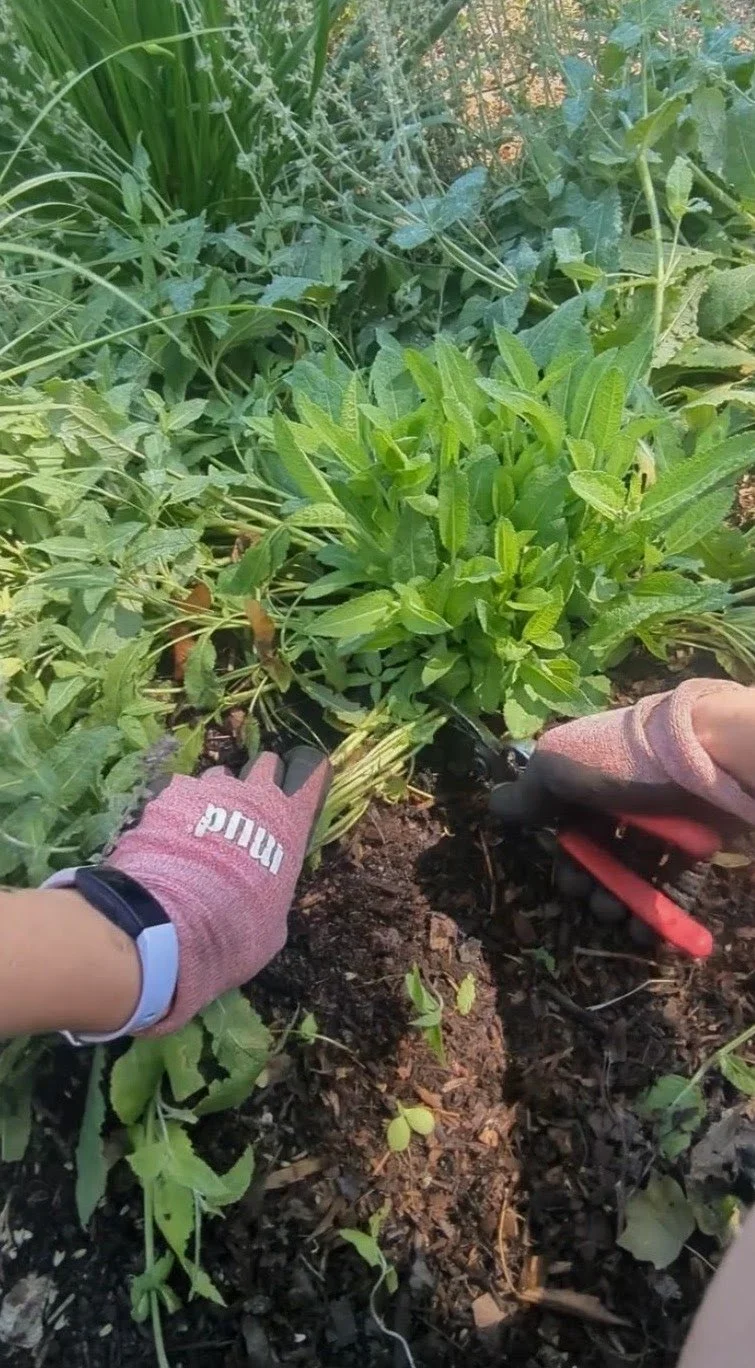
You might notice the spent stems of your salvia flop to the ground with new growth in the center - simply snip off all the old stems before the new growth and it will look like a whole new plant! This more dramatic method also works well on Nepeta (Catmint).
Spirea
Opposed to their bright, beautiful blooms we saw a month ago, spring-blooming spirea often look a little worn at this point in the season. Deadheading the entire shrub takes a while, so rather than individually removing flower clusters we recommend shearing your spirea to remove the faded blooms and lightly shape the plant. Many varieties will produce new flowers later in the season, and the fresh foliage will give the shrub a cleaner, healthier appearance.
Roses
Deadheading is one of the best things you can do to keep the flowers coming on most rose varieties. Once a bloom begins to fade and the petals start to fall, cut the stem back to the next outward facing bud or set of healthy leaves. There are a few varieties that can take a more dramatic chop, and some that don’t need to be deadheaded. Find out more by researching your particular variety.
Now is also a great time to give your roses a light feeding of fertilizer. Use a balanced rose fertilizer according to the label directions (we use Neptune's Harvest Rose & Flowering Fertilizer). Fertilizing after deadheading helps fuel the next round of flowers and keeps plants healthy through the heat of summer.
But be sure not to fertilize during a heat wave, like we had in the Boston area last week! You don’t want your plant to force new growth when it is stressed out by dry, hot weather. The temperatures have dipped this week (thankfully!) so now we are back to fertilizing as needed.
There are dozens of other popular plants that can benefit from a quick deadhead. Some of of the most common plants in our clients’ gardens that last longer when spent flowers are removed include:
Balloon Flowers (Platycodon)
Black-eyed Susans
Shasta daisies
Coreopsis
Yarrow
Catmint
Garden phlox
Should You Leave Seed Heads?
The short answer is: it depends on what your goals are. Columbine is a great example. If you'd like more columbine plants next year, leave some seed heads in place. If you’re passionate about leaving seeds for birds, you can leave them some seed heads. But if your Columbine is already crowding out other plants, you would prefer to keep your plants from spreading, or if you prefer a tidier looking garden, you can remove the seed heads.
The same idea applies to many perennials. Leaving some seed heads can provide food for birds later in the season, add winter interest, or allow plants to self-sow naturally. Deadheading every flower isn't always necessary—it's really a matter of your gardening goals.
A Note About Rainy Days
If it's raining, it's best to avoid pruning shrubs or making large cuts on your shrubs. Wet conditions can make it easier for fungal and bacterial diseases to spread from plant to plant or enter fresh pruning wounds. Deadheading is generally still fine - since you're only removing spent flowers and making very small cuts, the risk is much lower than with heavier pruning. If you’re out in wet conditions deadheading it might be tempting to make a few larger pruning cuts while you’re at it, but we urge you to save that for a drier day.