Prepping Your Garden For a Heat Wave
Summer is definitely making itself known - we are going to see temperatures above 100°F this week. A heat wave can be tough on plants, especially less established ones. A few days of extreme heat can lead to wilting, leaf scorch, dropped flowers or fruit, slowed growth, and in severe cases, permanent damage or death.
The good news is that a little preparation goes a long way! Taking a few simple steps before and during a heat wave can help your plants stay hydrated, reduce stress, and recover more quickly. Follow these four steps and you’ll have the best chance of your garden making it through unscathed.
Step 1. Water Deeply Every Day
The most important thing you can do this week is water deeply every day before and during the heat wave. A long, slow soak encourages roots to grow deeper into the soil, where moisture lasts longer. Run your hose on a slow trickle at the base of each plant until it is drenched, or use a nozzle to thoroughly soak the soil under and around the plant.
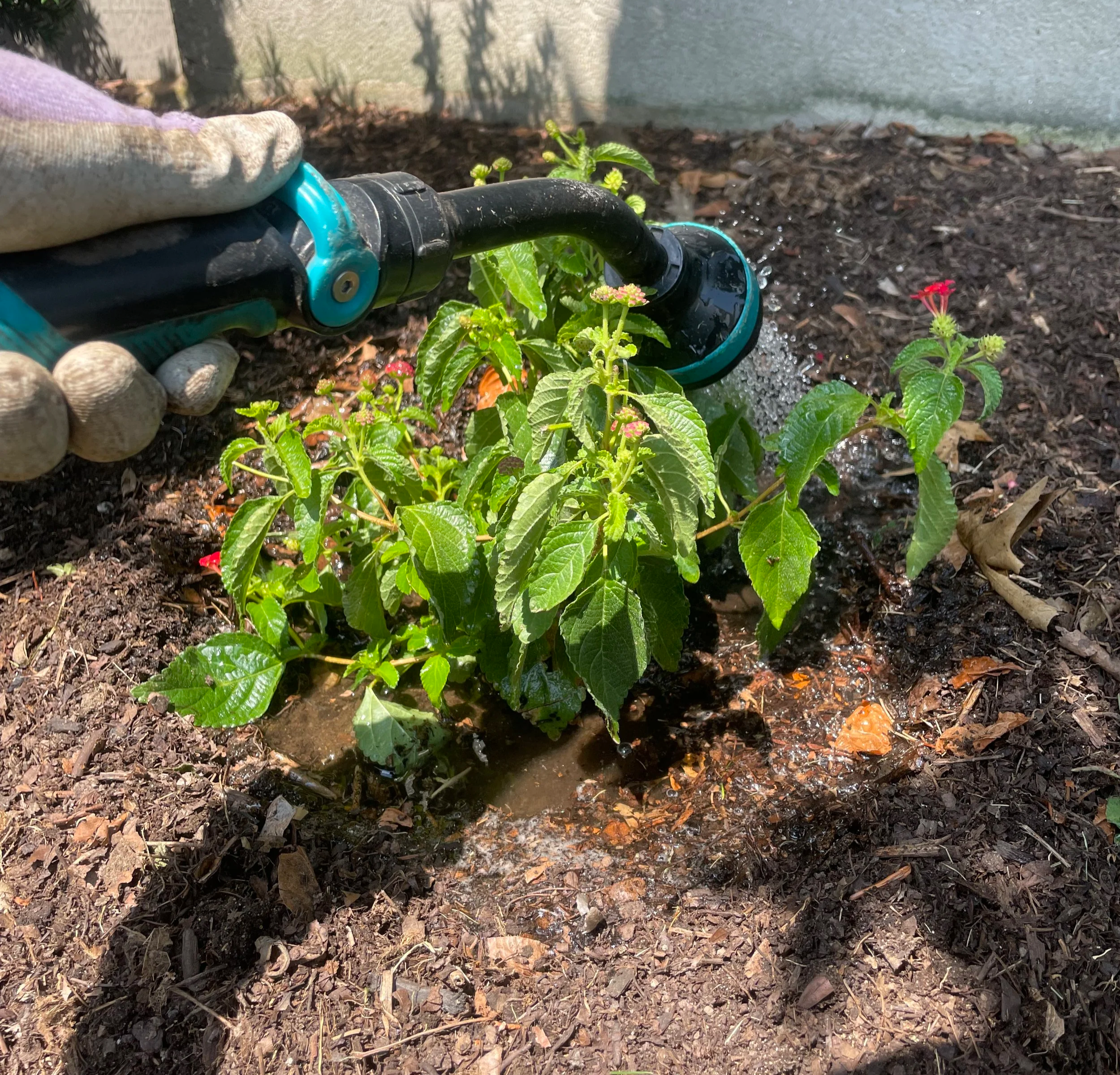
You can test if you’ve watered deeply by sticking your pointer finger into the soil where you watered - if any of that soil is dry you need to keep watering!
Water early in the morning so plants can absorb moisture before the hottest part of the day. If you have berms (small raised rings of soil around your plants), fill them with water and let it slowly soak into the roots. Berms help keep water exactly where it's needed instead of letting it run off.
Unless you have no other choice, we really recommend not relying on sprinklers to water — they usually don't deliver enough water to the roots. If sprinklers are your only option, they're better than nothing, but plan to run them longer during extreme heat.
As a general rule, gardens need about 1 inch of water per week (aka 0.6 gallons per square foot). During a heat wave, aim for double that amount. Once temperatures drop below 90°F, you can return to your normal watering schedule of 2–3 times per week.
Step 2. Add a Layer of Mulch Around Plants
Mulch is a great defense against extreme heat. A thick layer of organic mulch acts like insulation for the soil. It keeps roots cooler, slows evaporation, and helps the soil stay evenly moist between waterings. When applying mulch, spread it over the plant’s root zone but leave a few inches of space around the base of trees, shrubs, and plant stems. Piling mulch directly against the stems can trap moisture, encourage rot, and attract pests.
Step 3. Skip the Pruning
It may be tempting to tidy up overgrown shrubs or trim back damaged branches, but save that for once it gets cooler. Every cut you make creates a wound that the plant has to heal, and healing requires energy and water. During a heat wave, plants are already overexerting themselves to stay hydrated. Add in the extra stress of healing a wound without the water and energy it needs, the shrub can really struggle. Pruning can also increase the risk of sunscald, heat damage, and vulnerability to pests/disease.
Step 4. Don't Fertilize
Normally, early summer is a great time to fertilize blooming perennials like roses. However, fertilizer encourages plants to push out new growth, which requires extra water and energy. During a heat wave, it's much better to let plants focus on staying healthy rather than producing new growth. Hold off on fertilizing until temperatures fall.
A little preparation goes a long way! With deep watering, mulch, and by holding off on pruning and fertilizing, your garden will be much better equipped to make it through the heat. Feel free to reach out to us with any questions.