Invasive Species That Might Live In Your Garden
For thousands of years, people have brought plants from one location to another. A lot of good has come from this migration of certain plants! However, many introductions of non-native plants have been detrimental to our ecosystem.
In Massachusetts, there are 72 species of plant that are recognized by the Massachusetts Invasive Plant Advisory Group as "Invasive," "Likely Invasive," or "Potentially Invasive." The main criteria for a plant to be labelled as invasive is it being non-native to an ecosystem, spreading aggressively, and causing harm to the environment, economy, or human health. Invasives are usually the most prolific and detrimental in forests, but there might be many species living in your yard!
Spring and early summer is a vital time remove invasive plants, as they are often still small and haven’t sent out flowers and seeds yet. If you recognize any of these plants, it is crucial for you to remove them now, as when seeds have formed they will spread the plant’s growth rapidly.
Below we will outline the most common invasives we see in our clients’ yards in the Greater Boston Area, and our recommendations for their removal that don’t use herbicide.
Creeping Bellflower
Although the flowers are quite pretty, creeping bellflower is very aggressive and hard to get rid of because of its rhizomatous roots. Bellflower has a strong and extensive root system that spreads quickly, and will easily take over your garden and choke out other plants.
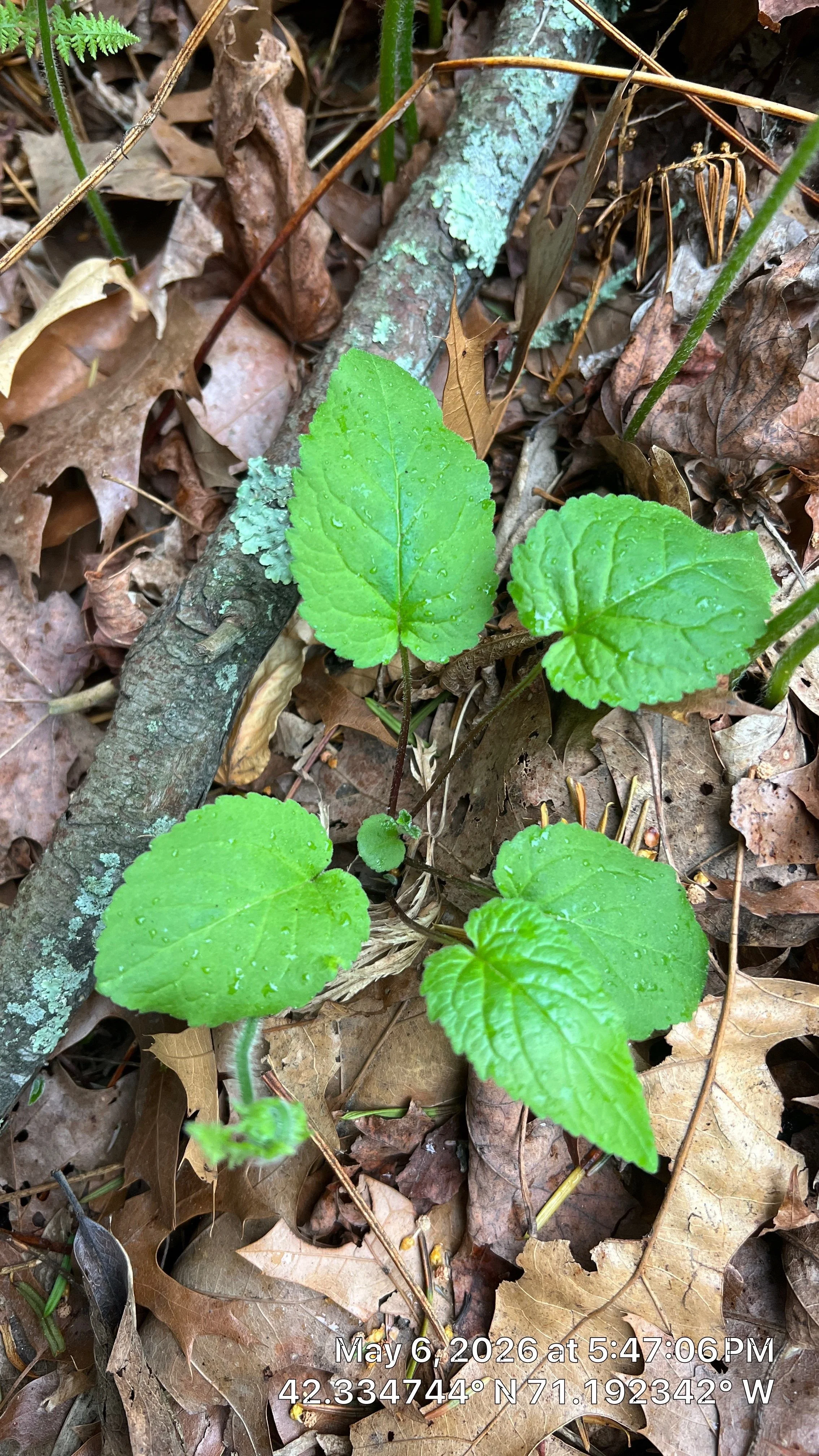
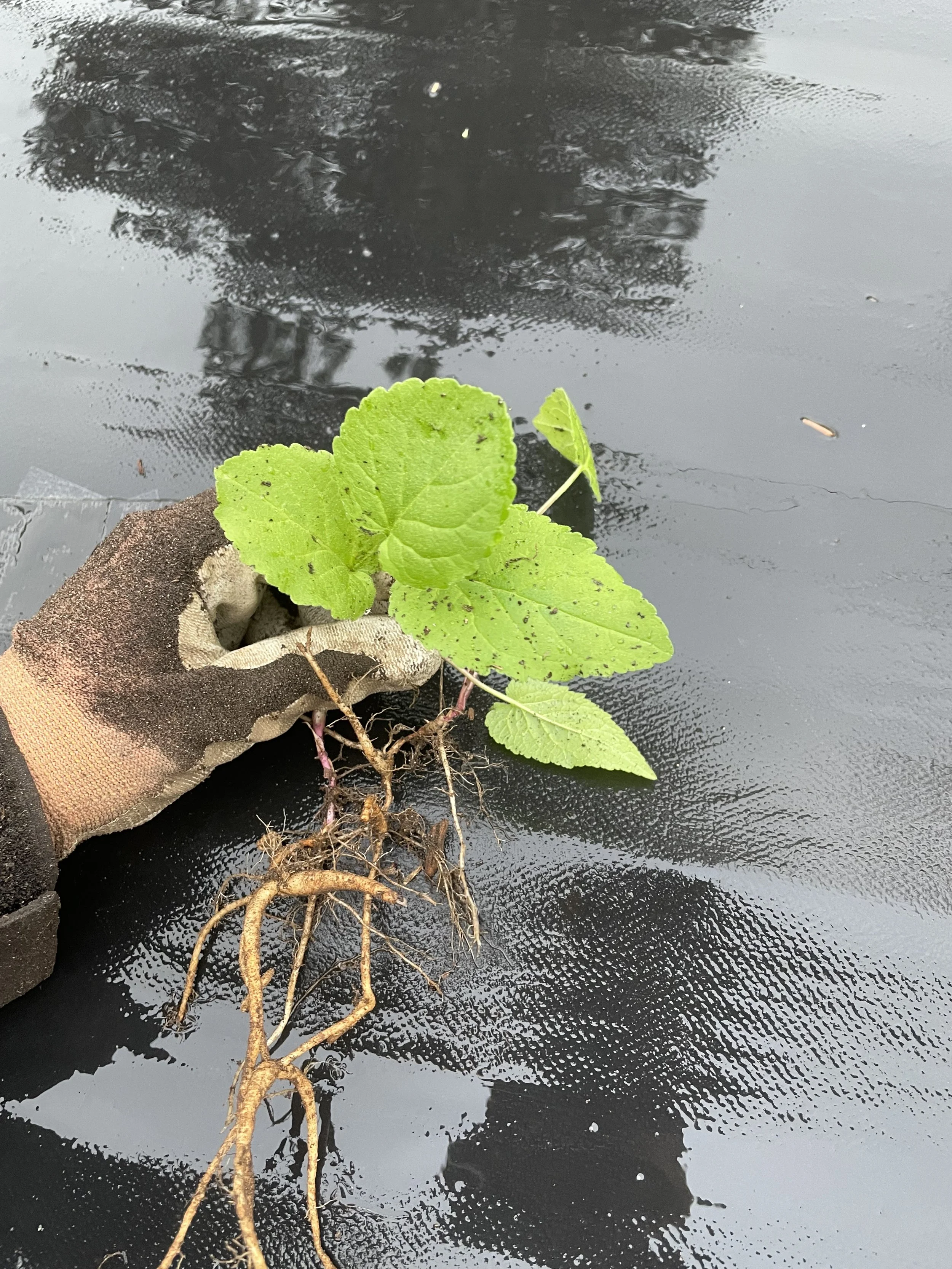
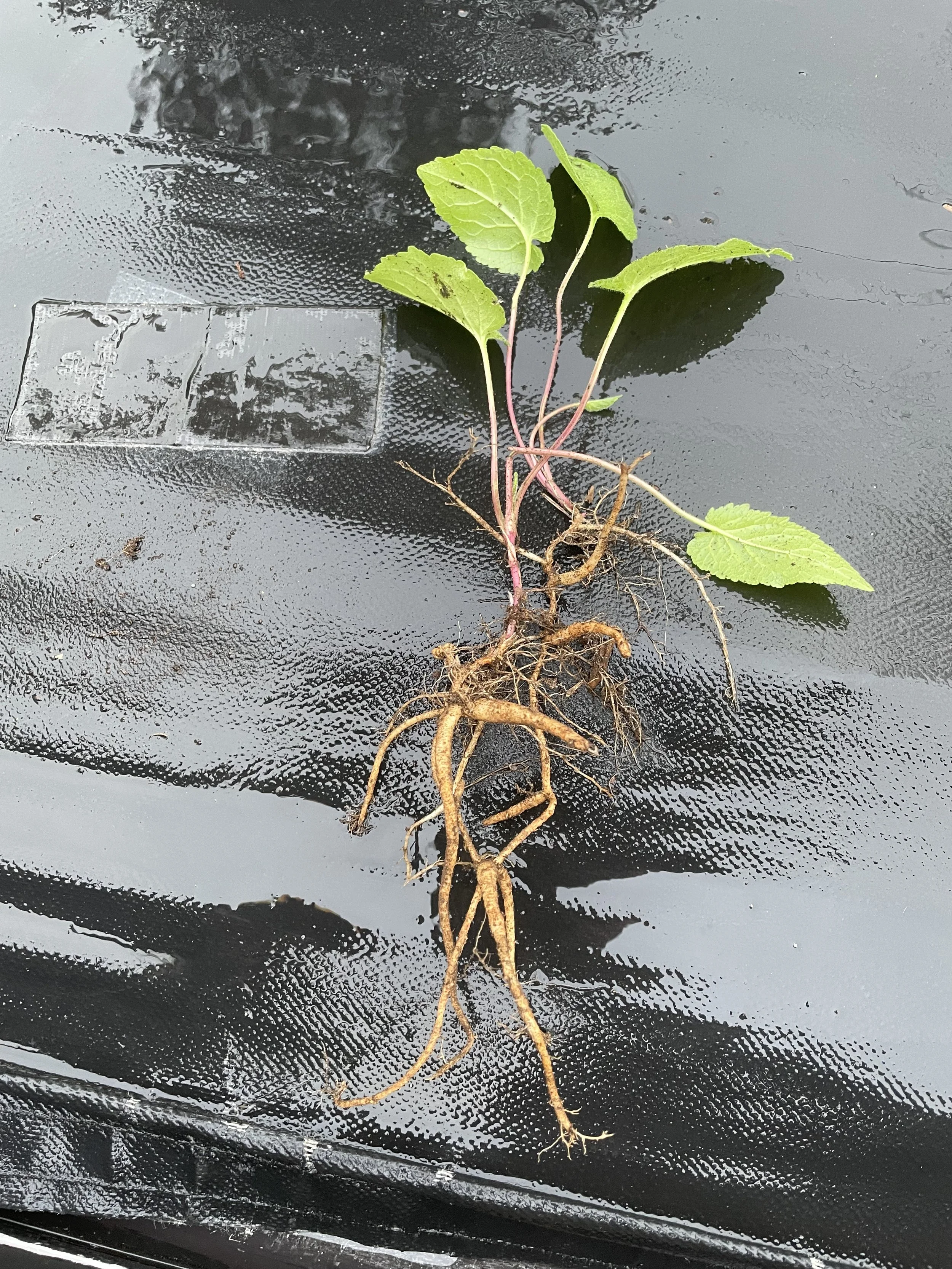
Removal:
For a large patch, a root shovel or long spade is recommended: the carrot-like roots run very deep and you will likely need to do multiple rounds to remove it completely. Put the remains in the trash, as they can re-root, NOT in your compost or yard waste bins!
Black Swallow-wort
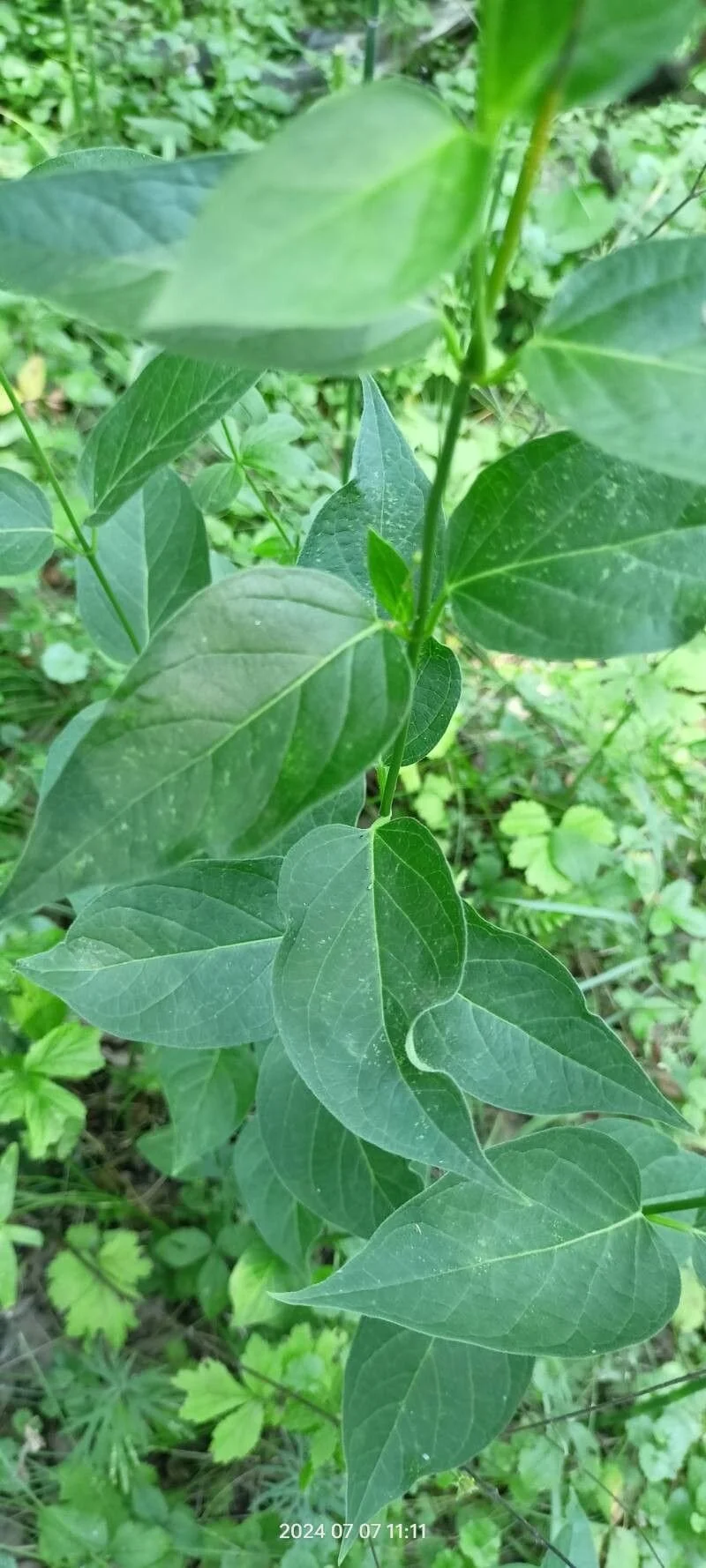
One of the most common invasives we see in our clients’ lawn and gardens is black swallow-wort. This vine grows very quickly and produces thousands of seedlings with its wind-blown seeds. Along with smothering plants, this invasive species is also detrimental to monarch butterflies. Monarchs lay their eggs on the swallow-wort, thinking it’s milkweed, but when the caterpillars emerge and eat the leaves they die, as it is toxic to them.
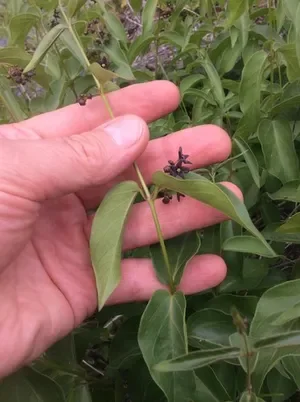
Removal:
If you do not have time for a complete removal, do a quick pick of the seed pods to make sure it can not seed further and try to cut the vines to the ground. For removal, use a trowel or a shovel to get all of the spindly white root system and throw it away in the trash so it does not re-root in the compost.
Oriental Bittersweet
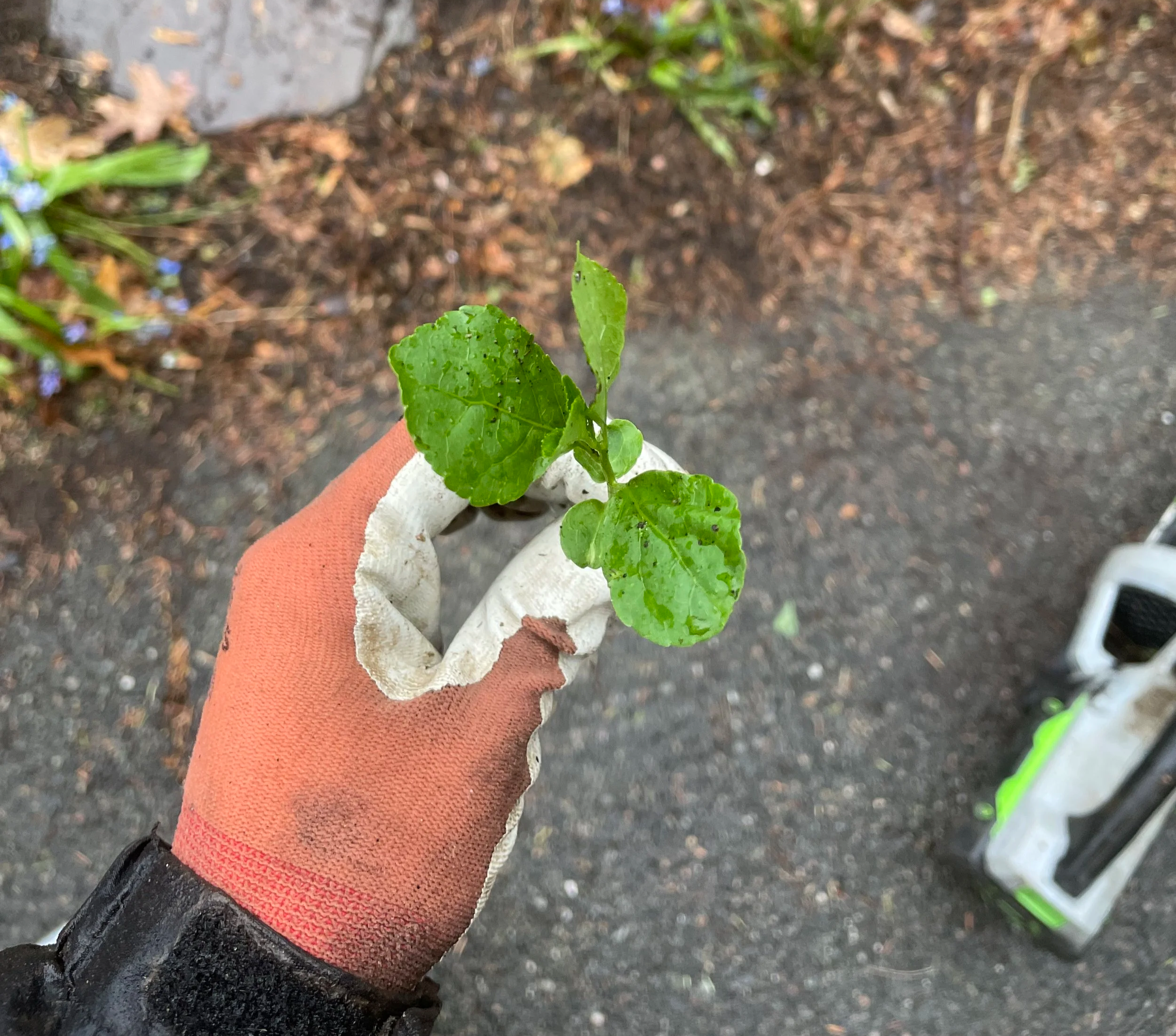
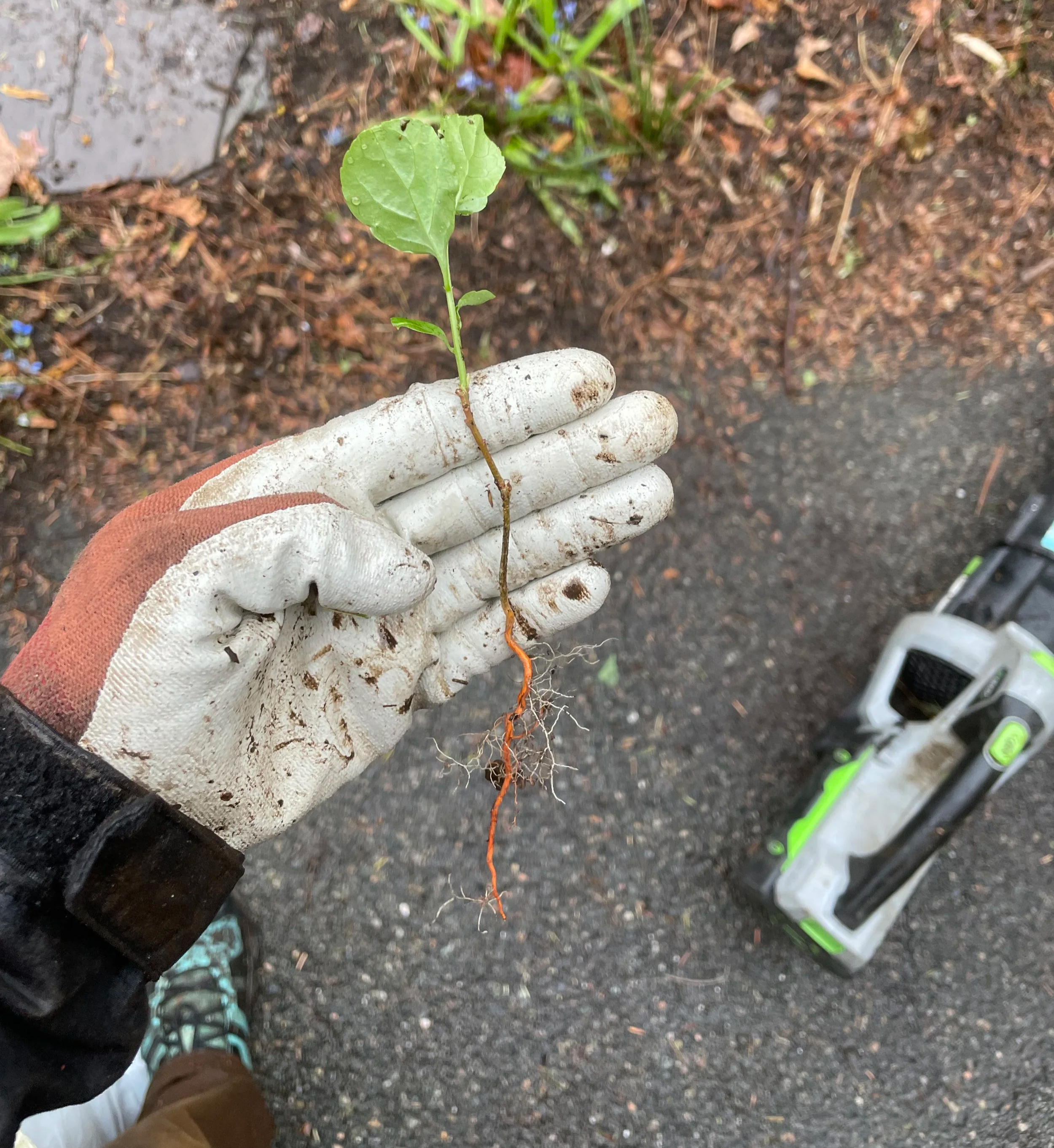
Sporting bright orange roots, this plant is a relentless vine that can strangle even the biggest tree! Bittersweet can take over shrubs and trees to the point where you can no longer see your beloved plant. Removal is crucial before it gets out of control!
Removal:
For thick, large vines that cannot be dug out, cut the vine as close to the ground as possible to kill it. This is only temporary and will need to be repeatedly done, but it is better than letting the vine kill the plant it is smothering. For smaller vines, use a shovel to get as much of the roots as you can and throw in the trash. In the case of extreme overgrowth, herbicide use might be necessary - see below for the least ecologically harmful method of application.
Garlic Mustard
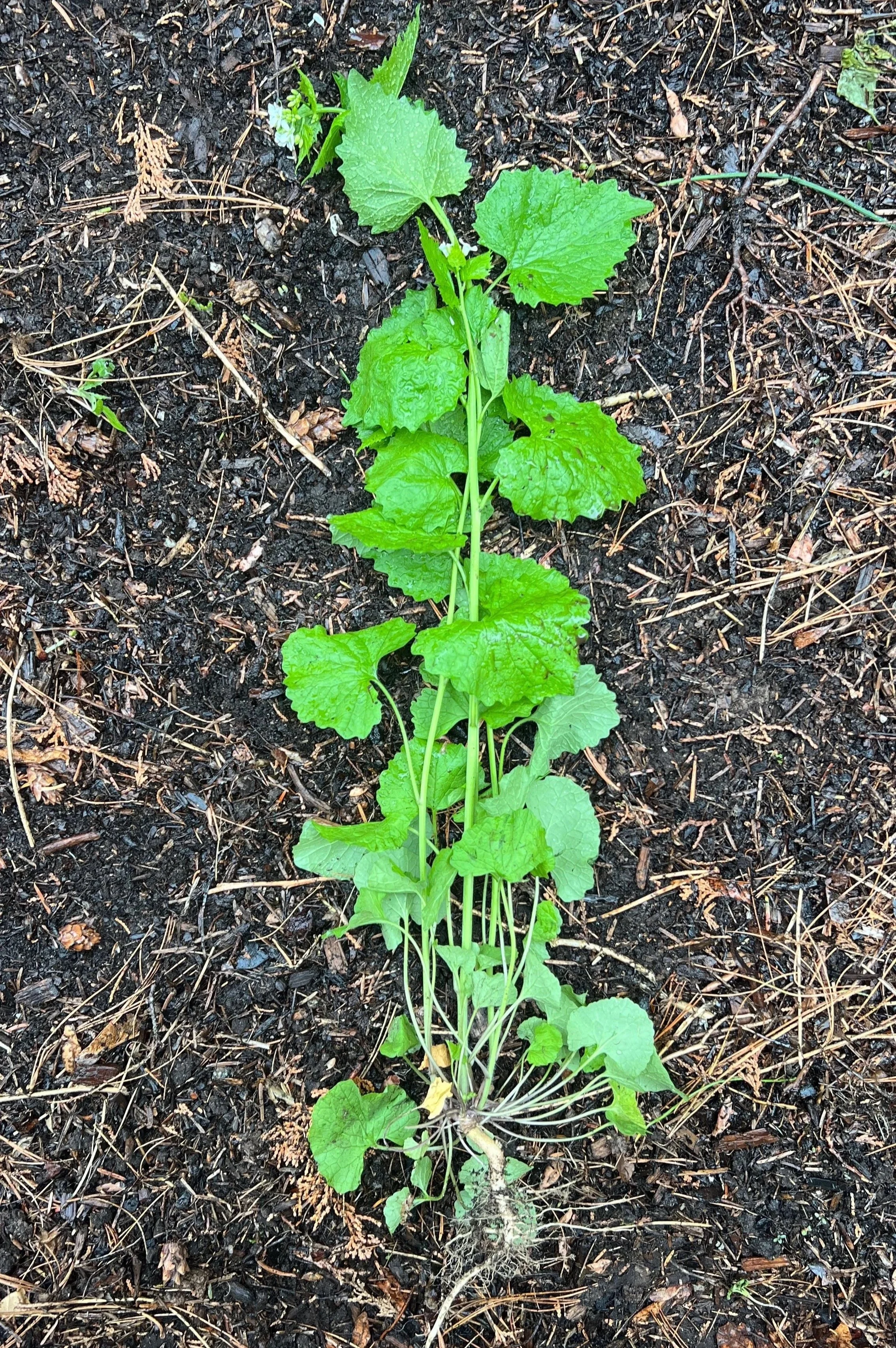
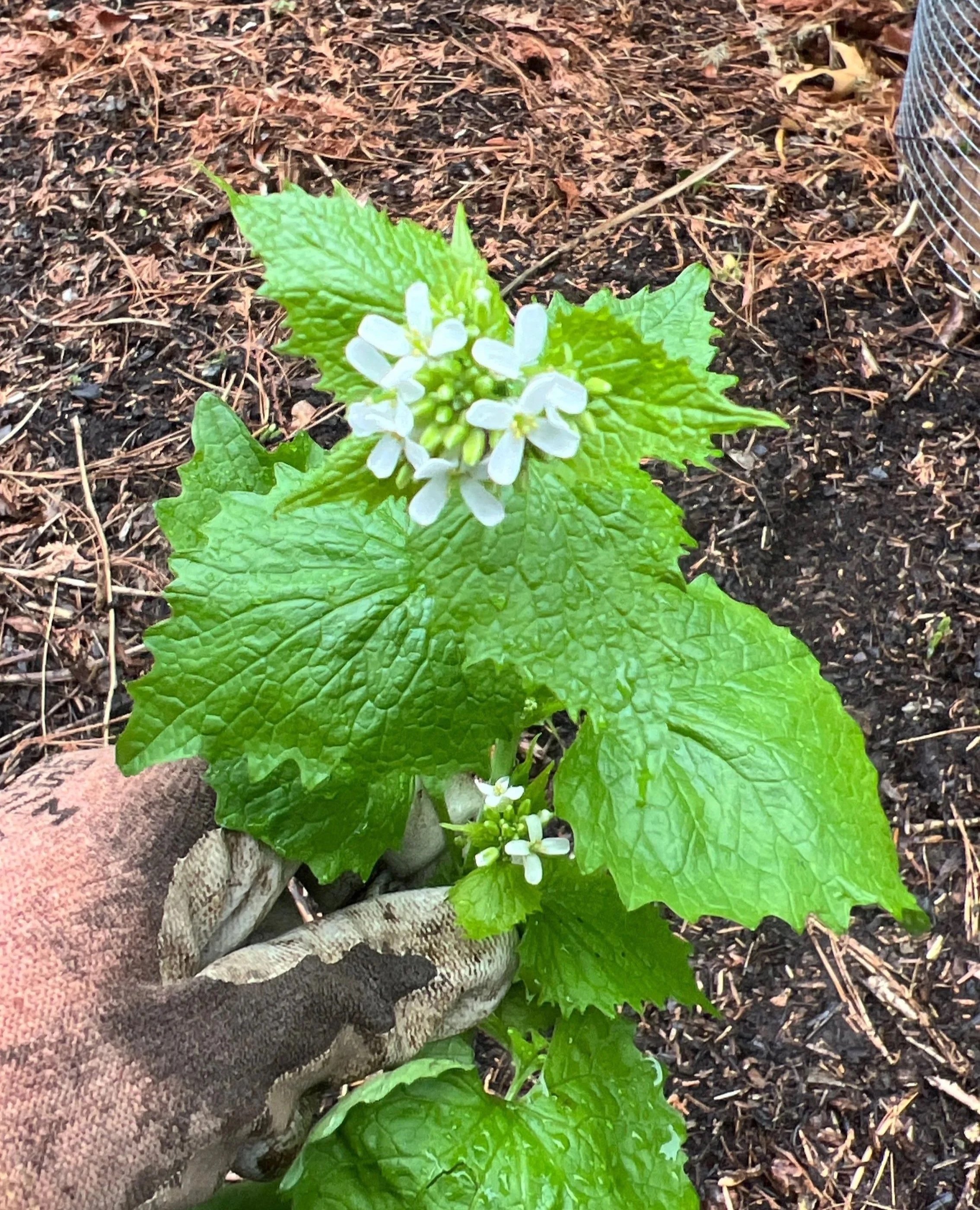
Another edible invasive, Garlic mustard, out competes native species for resources and spreads its seeds by the hundreds in just a singular plant. We have found this to be one of the easier invasives to pull when they are young, especially after a day or two of rain.
Removal:
Hand pull/use a shovel to get all the roots. This has a taproot, so be sure not to just break off the top of the plant, otherwise it will keep coming back! Dispose in the trash to prevent the seeds from spreading.
Japanese Knotweed
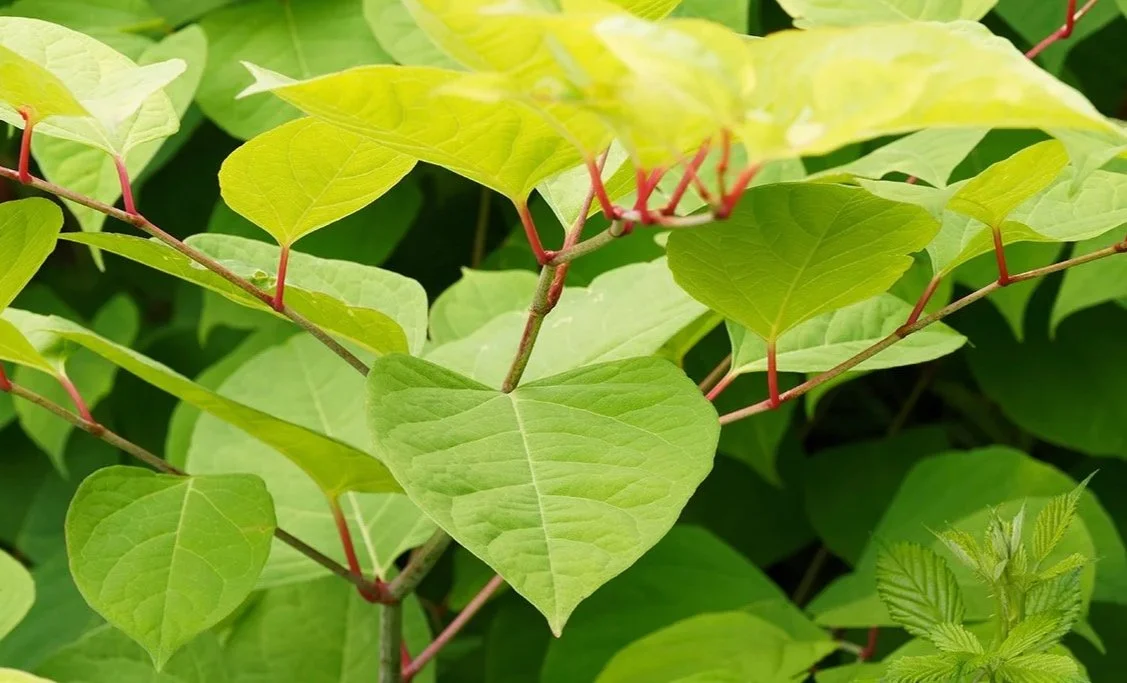
Known as one of the most aggressive invasives out there, Japanese knotweed is an almost indestructible plant that has been detrimental to our ecosystem. There are many ways that people try to remove this invasive, but unfortunately most have come to the conclusion that a systemic herbicide is the only way to truly eliminate it.
Removal:
If you do not want to use herbicide, you can try to keep the knotweed under control by covering it with mulch, putting a tarp over it to try and smother it. Be sure to step on the tarp every now and then to break any surely emerging new sprouts! And as with all invasive plants, be sure to throw the remains in the trash so it doesn’t spread further. If nothing has worked, you might need to resort to herbicides - we outline the least ecologically harmful method of application below.
A note on manual removal: it is unlikely that you will be able to find and excavate all of this plant’s large and persistent root system. And the more you break up the roots, the more you will leave small pieces behind, allowing the plant to resprout in more places. It is a safer bet for you to simply cut the stems completely to the ground to deprive it of energy. It will continue to come back, but cutting the stems to the ground over and over might eventually kill the plant all the way down to its roots.
Last Resort - Herbicide Cut and Swab Method
For invasives like mature, overgrown bittersweet and Japanese knotweed, manual removal might be impossible. In these instances, we recommend using the cut and swab method of herbicide application. This method should have the least runoff and use the least amount of herbicide, minimizing any potential ecological damage. For this method, cut the invasive as close to the ground as possible and immediately paint the stub with a systemic herbicide (for maximum efficiency apply within 15 seconds of cutting). Check out this Alabama Extension article for more detailed instructions and recommended herbicides. This should be the absolute last resort for large and overgrown vines where removing all roots would be impossible, as herbicides have been shown to harm ecosystems, contaminate soil, and affect human and animal health. Always follow the instructions on the label of the product you use to keep you, your garden and the surrounding ecosystem safe.
Do you recognize any of these invasives in your landscape? Green Urb Gardens can help you remove them - reach out to us today!