
Volunteer experience with Habitat in Belmont
During my first experience with gardening, I worked at the Mass Audubon’s Habitat Education Center and Wildlife Sanctuary in Belmont, Massachusetts. I spent the morning working to clear out out invasive species. It was an experience that taught me a lot about our native plants and what humans can contribute to take care of them.
When I first arrived at Habitat, it was awesome to see children running around having fun during their camp time. I was met by a Habitat staff member, Amaya, and she brought me back to the beautiful garden Habitat had. She explained that we were doing a cleanup of the garden, trying to declutter. My initial task was digging out the invasive species.
I worked on a native Massachusetts plant called Rough Goldenrod and my goal was to clear out the non-native plants growing within it called Tall fescue and Crabgrass. The native plant was a typical green grass growing alongside a striking bluish teal-color grass. The invasive teal-colored grass looked like an outsider when next to the other plants. From first glance I was able to pinpoint the invasive species that could overcrowd the native one. Surprisingly, we ended up removing some of the rough goldenrod plant because ironically being a native plant, it was growing too aggressively for the other plants growing alongside it. I started off with a hand shovel and dug out the invasive plants through the dirt to fully get the entire plant from the root and then continued with the same strategy for the goldenrod plant. This task took me about an hour to go through the entire section of invasives. It wasn't the easiest thing, but it was manageable for my first time.
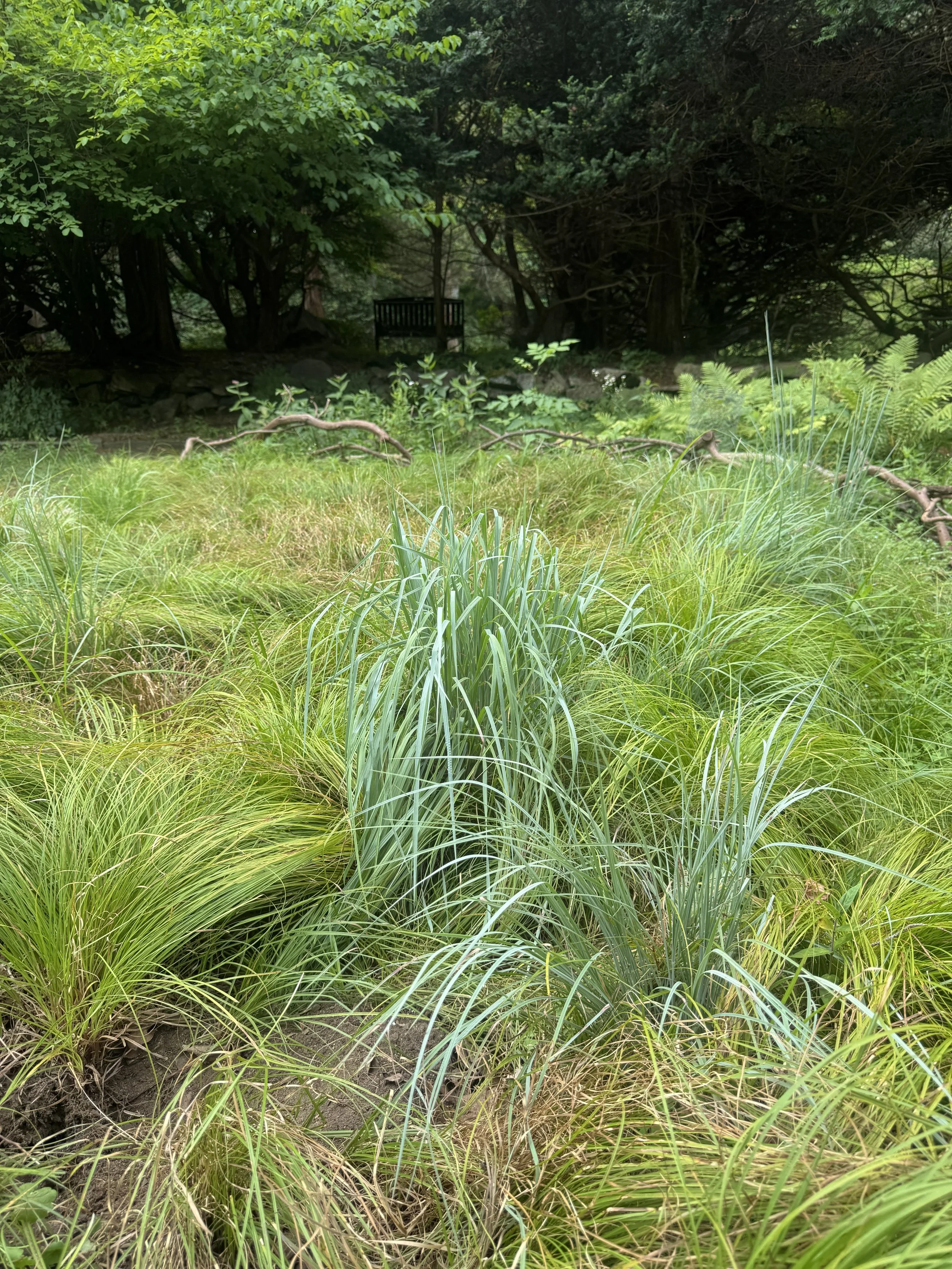
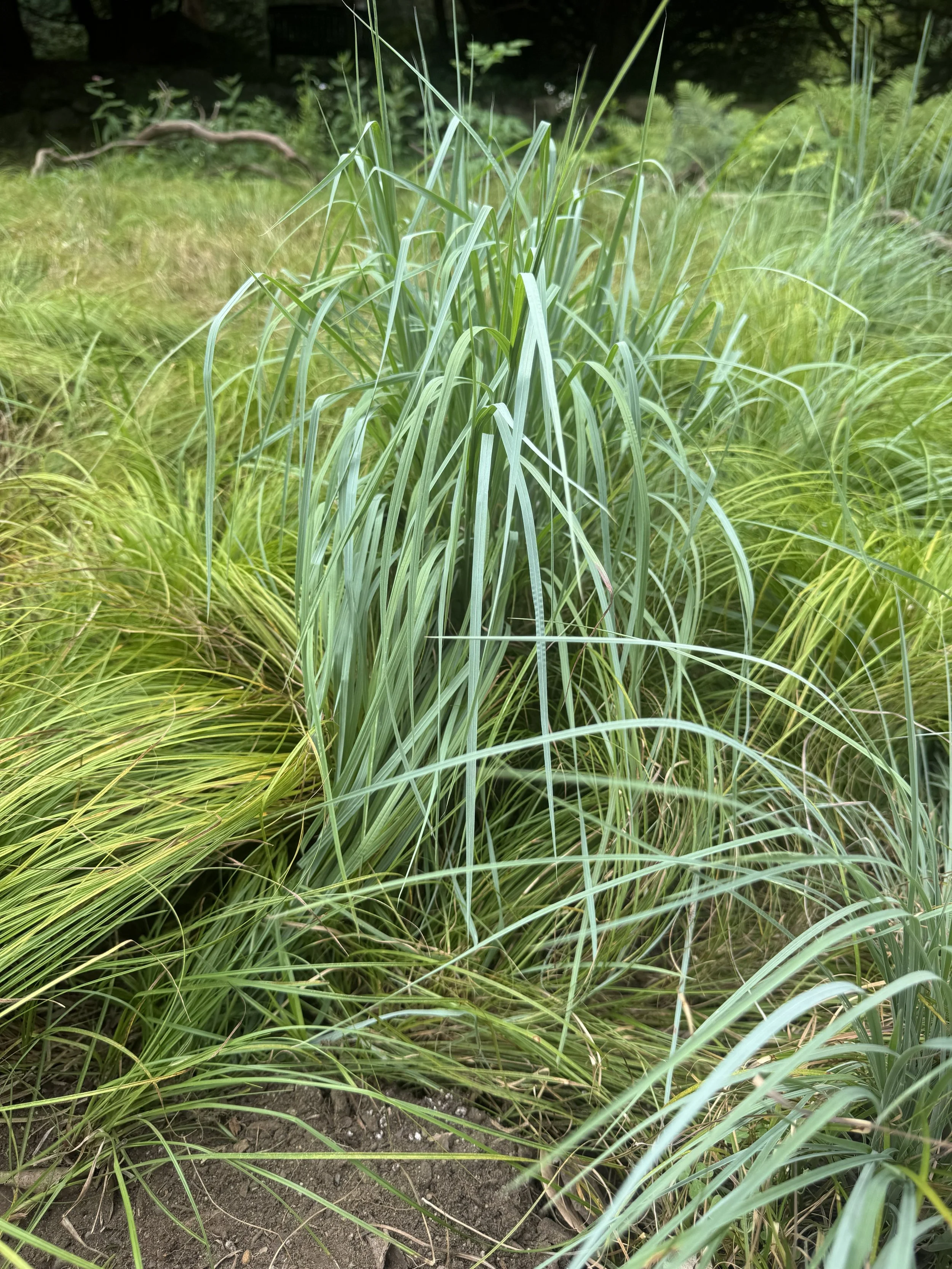
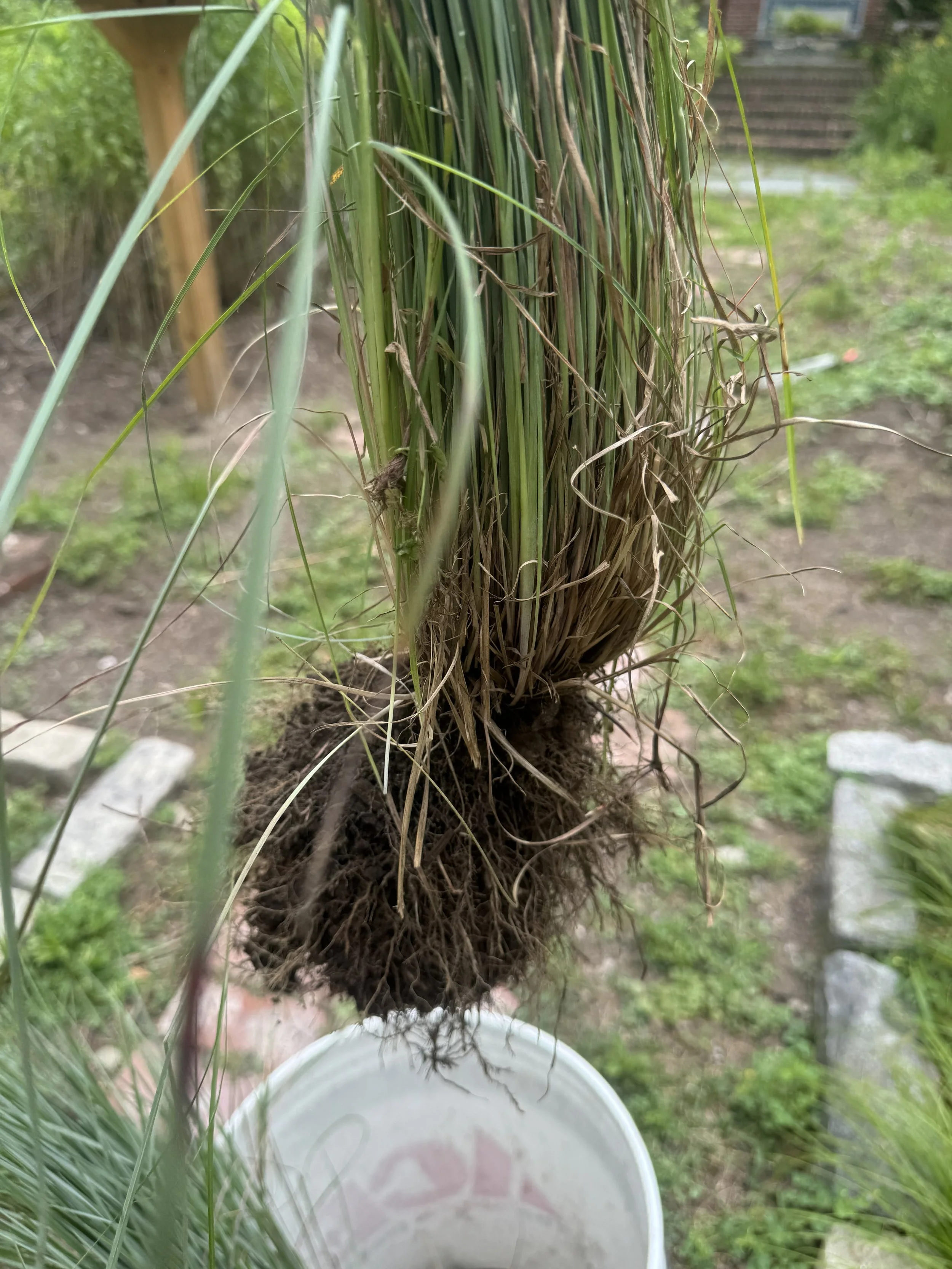
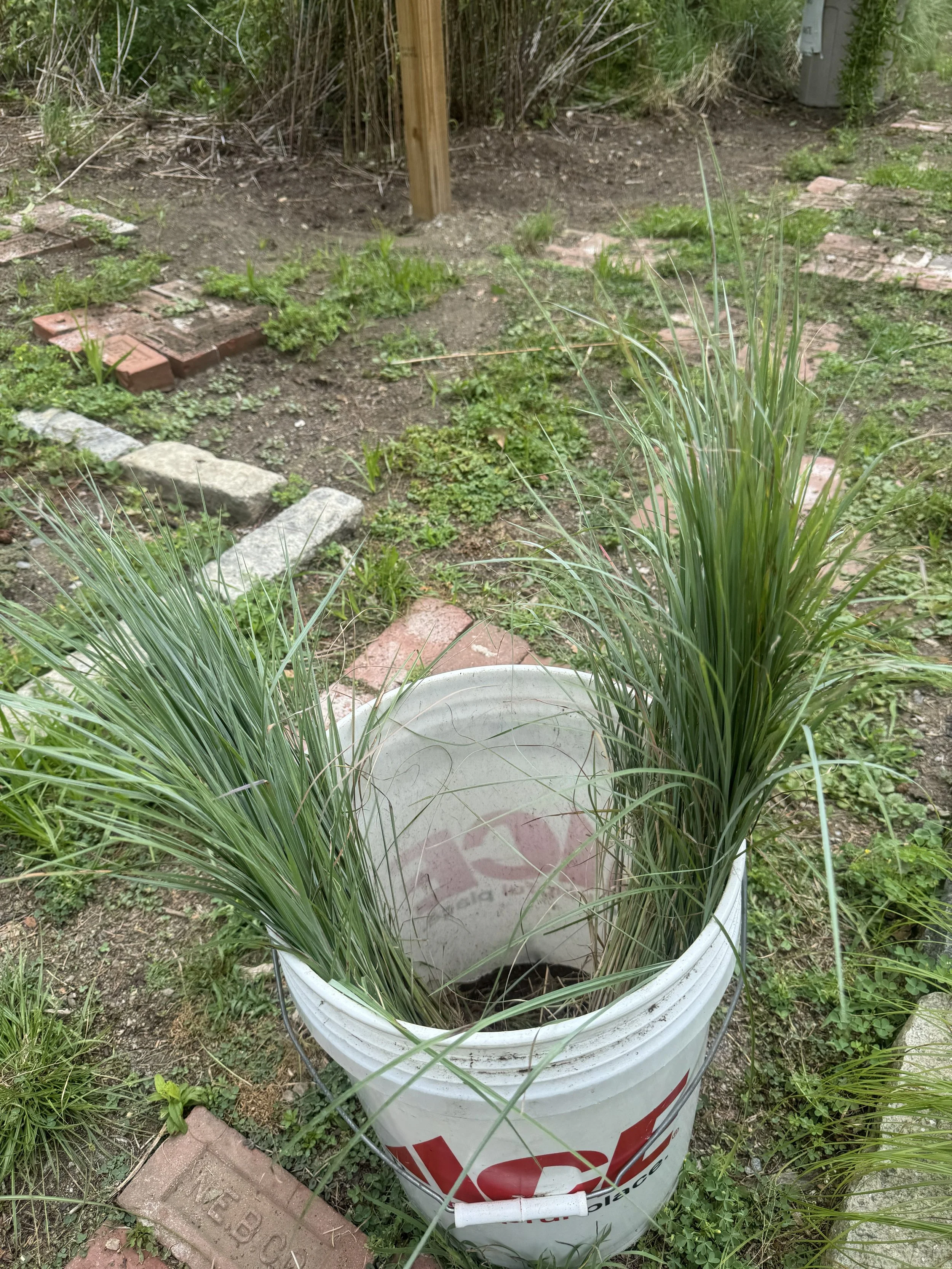
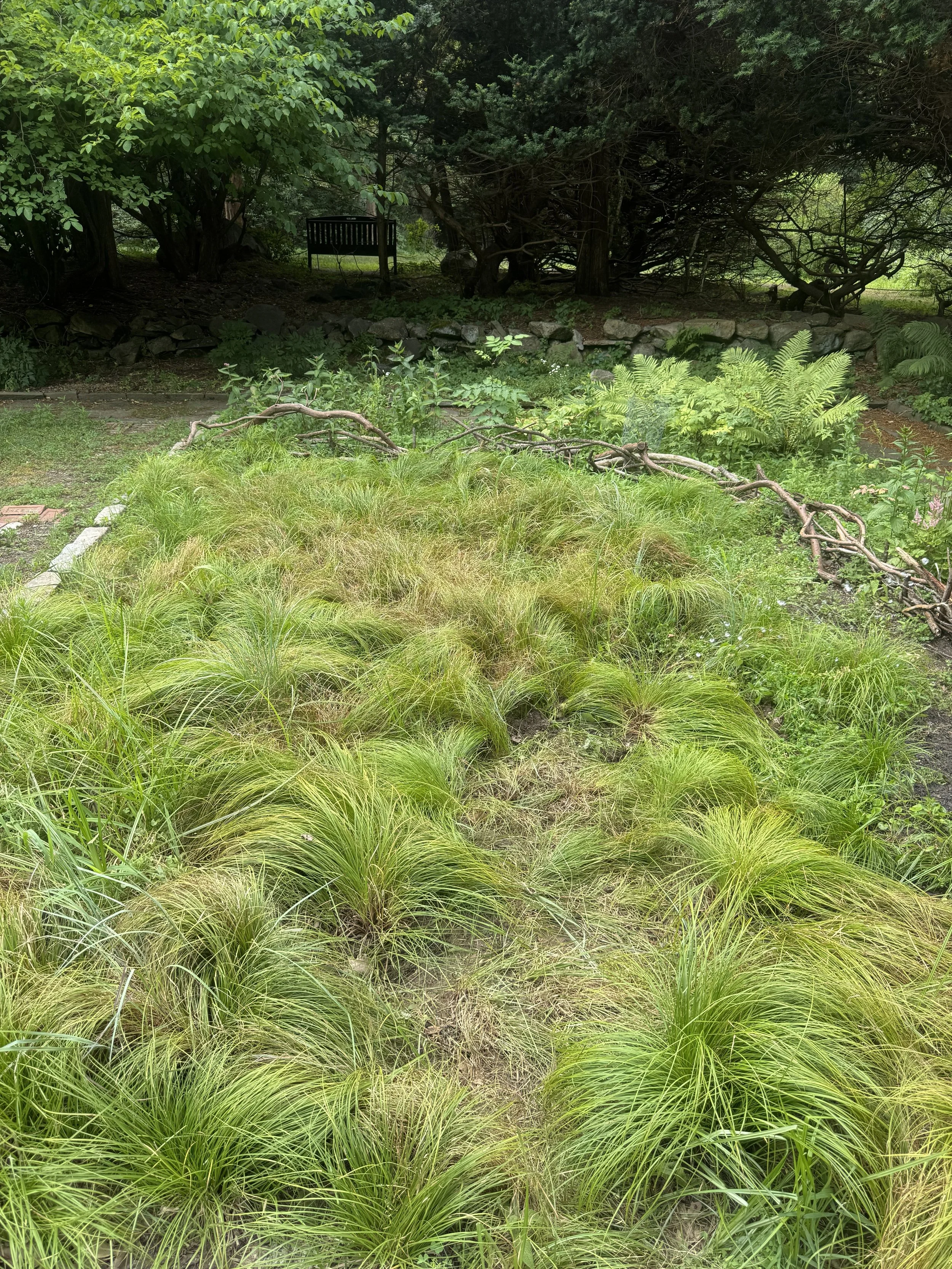
Once this was completed, we began to water the plants and continued to analyze the garden to see what we were going to take on next. Amaya had begun to show me the amount of sticks and leaves that were interrupting plants. She explained that this would be bad for the plants and interrupt their growing. We then began to use buckets to sweep up all the sticks within the growing area and then clear out the pathway alongside the garden full of sticks, leaves and plant debris.
The main question readers are probably asking right now: what is the impact on non-native plants in the environment? Non-native plants growing in a new environment do not have their natural predators to keep them in check. This means the non-native plants can outcompete the native ones. And some non-native plants, like the Oriental Bittersweet vine, grow so aggressively in a new environment that they will completely cover and kill other plants around them!
Pollinators like bees, butterflies, and hummingbirds truly rely on feeding on specific plant species. Some local pollinators will not feed on non-native plants because those insects and animals evolved to feed only on certain native plants! Seeking out non-natives that may be taking over your garden is important and introducing more native plants is a way to benefit the whole ecosystem.
This experience taught me about how much upkeep it takes to have a garden. It also taught me that every plant may not be benefitting the environment or other plants. The invasive plants that were not native to Massachusetts were growing alongside Massachusetts plants and progressively going to eventually overcrowd the native plants. Amaya not only gave me the experience of a lifetime, but also made me feel good to help the environment one day at a time. Ultimately, this experience taught me that growth begins right where comfort ends.