Protecting Trees and Shrubs From Bunnies
If you go outside and look at the shrubs and trees in your garden, you might find that they have been chewed and debarked at high rates this winter. Winter can be a surprisingly dangerous time for plants, especially young trees. When snow piles up and food becomes scarce, rabbits and other small animals often turn to tender bark as an easy meal. Without protection, a single winter—especially one with deep snow—can cause lasting damage or even kill a shrub or tree.
Heavy snow like what we had this year makes the problem worse. As snow accumulates, it raises the ground level around a plant, allowing rabbits to reach higher up the trunk where the bark is still thin and nutritious.
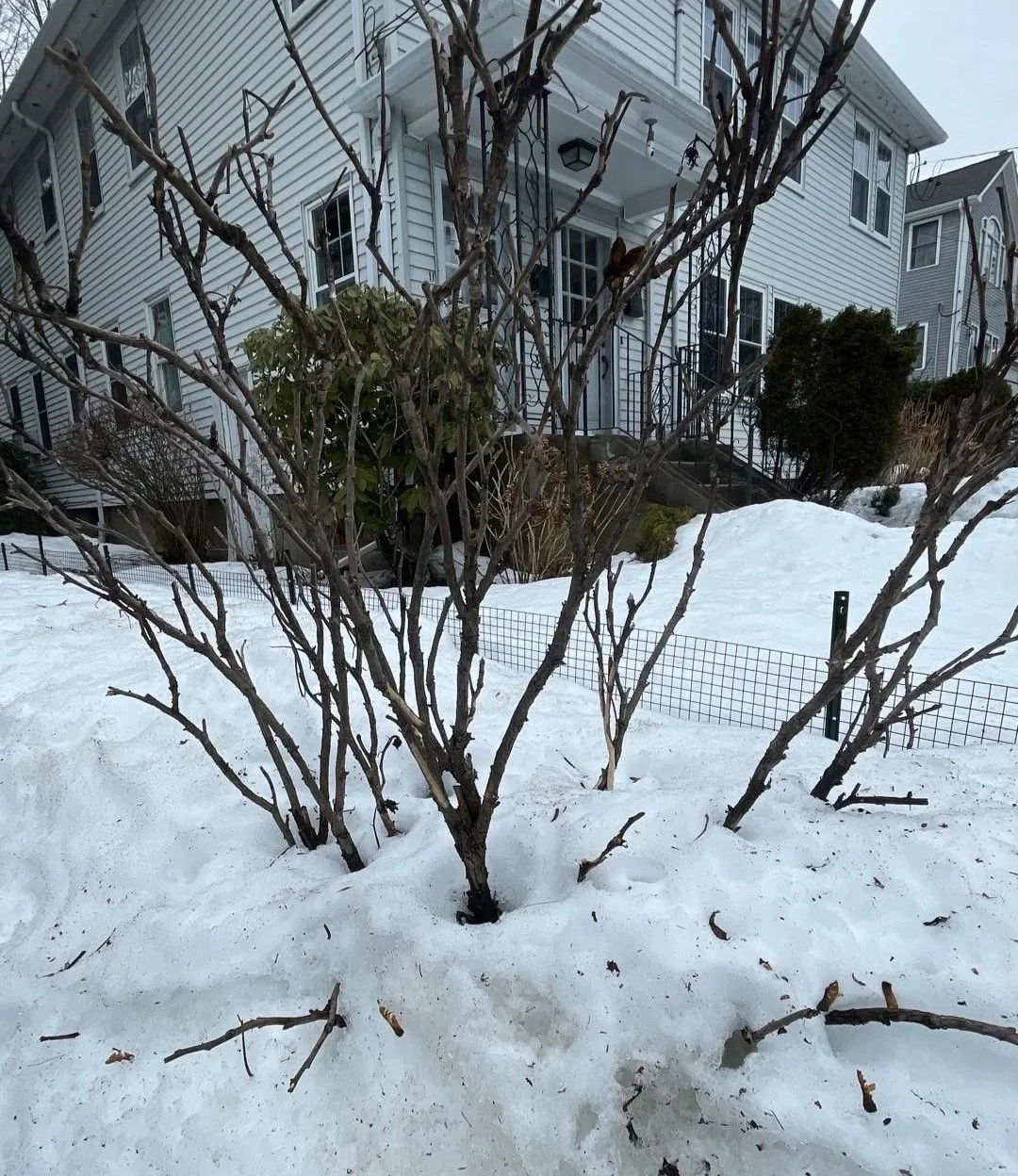
What might normally be out of reach suddenly becomes the perfect snack, such as this normally-protected Tree Peony. With high snow accumulation in the Boston suburbs this year, rabbits hopped right over existing 4’ fencing!
To understand why this is so damaging, it helps to look at how trees move water and nutrients. Inside the trunk are specialized tissues called xylem and phloem. The xylem acts like a network of tiny pipes that carries water and dissolved minerals from the roots upward to the leaves. The phloem moves sugars produced in the leaves down through the tree to feed the roots and other tissues. These transport systems sit just beneath the bark.
When rabbits chew away the bark, they often remove the phloem and damage the xylem along with it. If the damage is limited to one side of the trunk, the tree may still survive by moving water and nutrients through the remaining intact tissue. But when the bark is removed all the way around the trunk—a type of injury called girdling—the tree’s transport system is essentially cut off. Water can no longer move properly from the roots, and sugars cannot travel back down to sustain the root system. Over time, the tree slowly starves and dies.
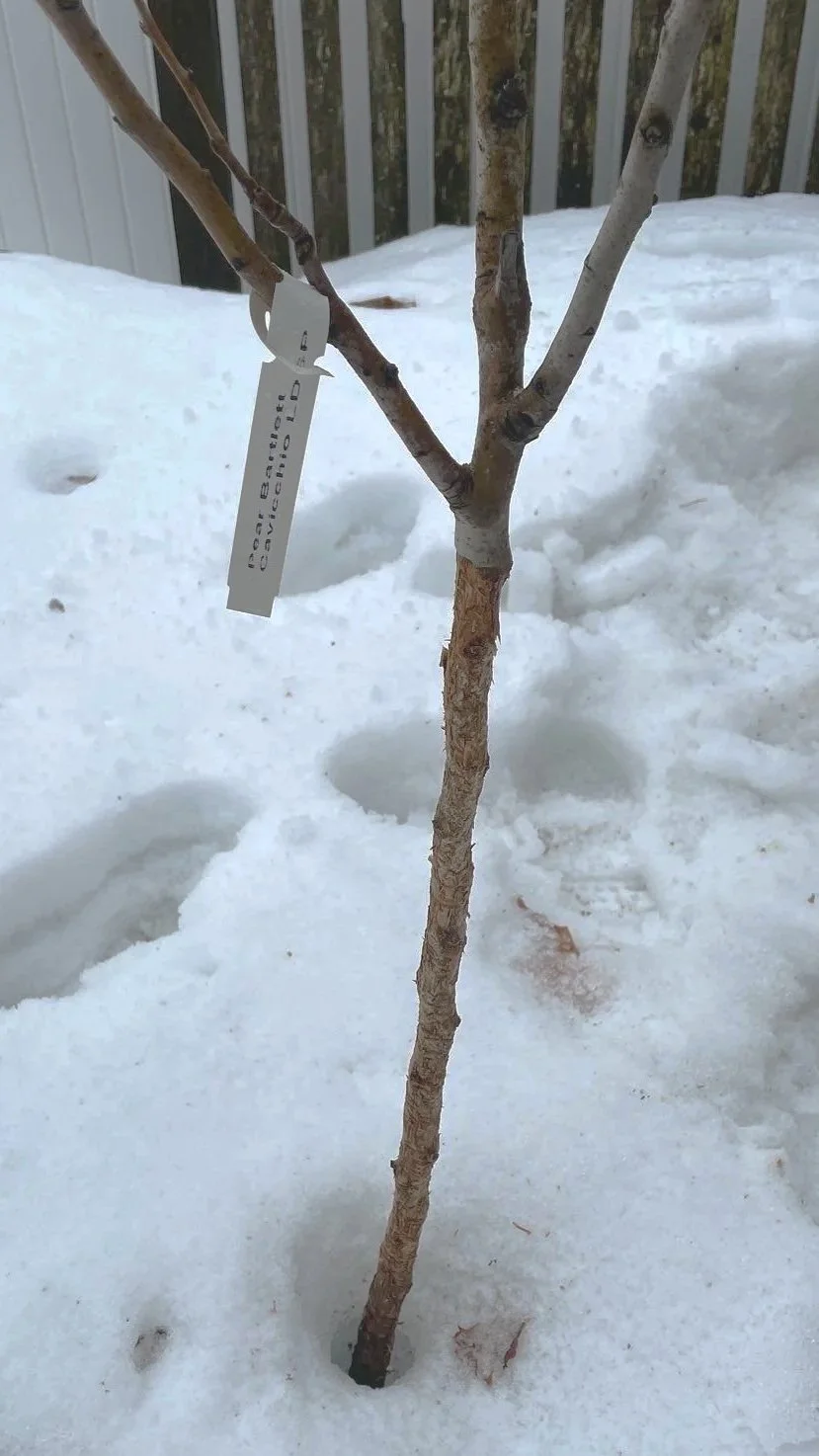
This young pear tree is almost certainly a goner due to girdling.
You can see the clear delineation right underneath the lowest branch on the tree where the remaining bark meets the line of bark the rabbits chewed off, which extends all the way to the bottom of this poor tree.
This is why simple winter protection can make such a big difference. Installing a small wire fence or tree guard around young trees in late fall creates a barrier that keeps rabbits from reaching the bark. The guard should extend high enough to account for expected snow depth and be placed a few inches away from the trunk so animals cannot chew through it.
Now, after most of the snow has melted, it’s also important to check your plants. Cage damaged plants that still have a chance of survival, and remove branches that have been girdled so the plant doesn’t continue to send energy to them, as they will not survive.
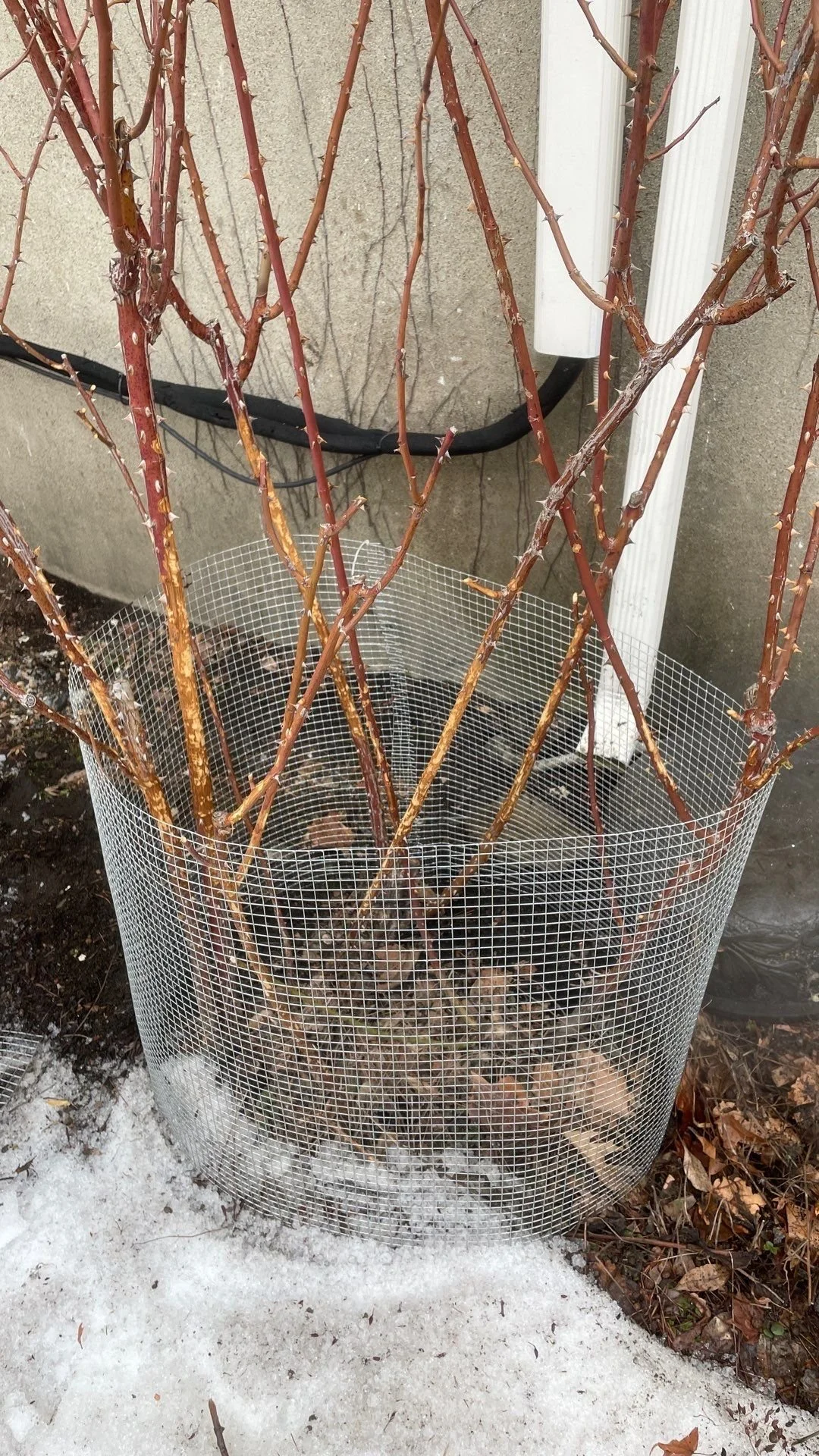
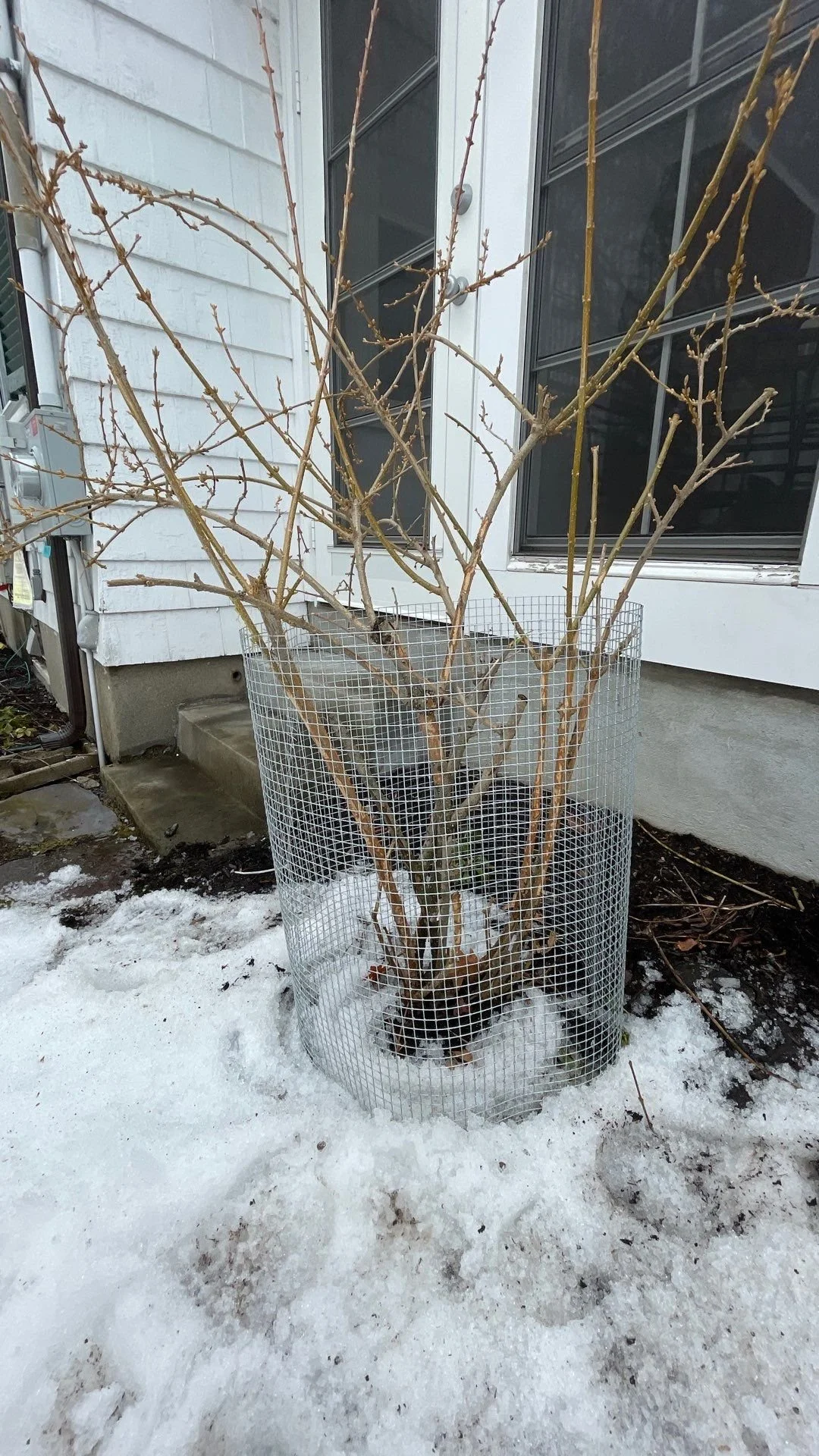
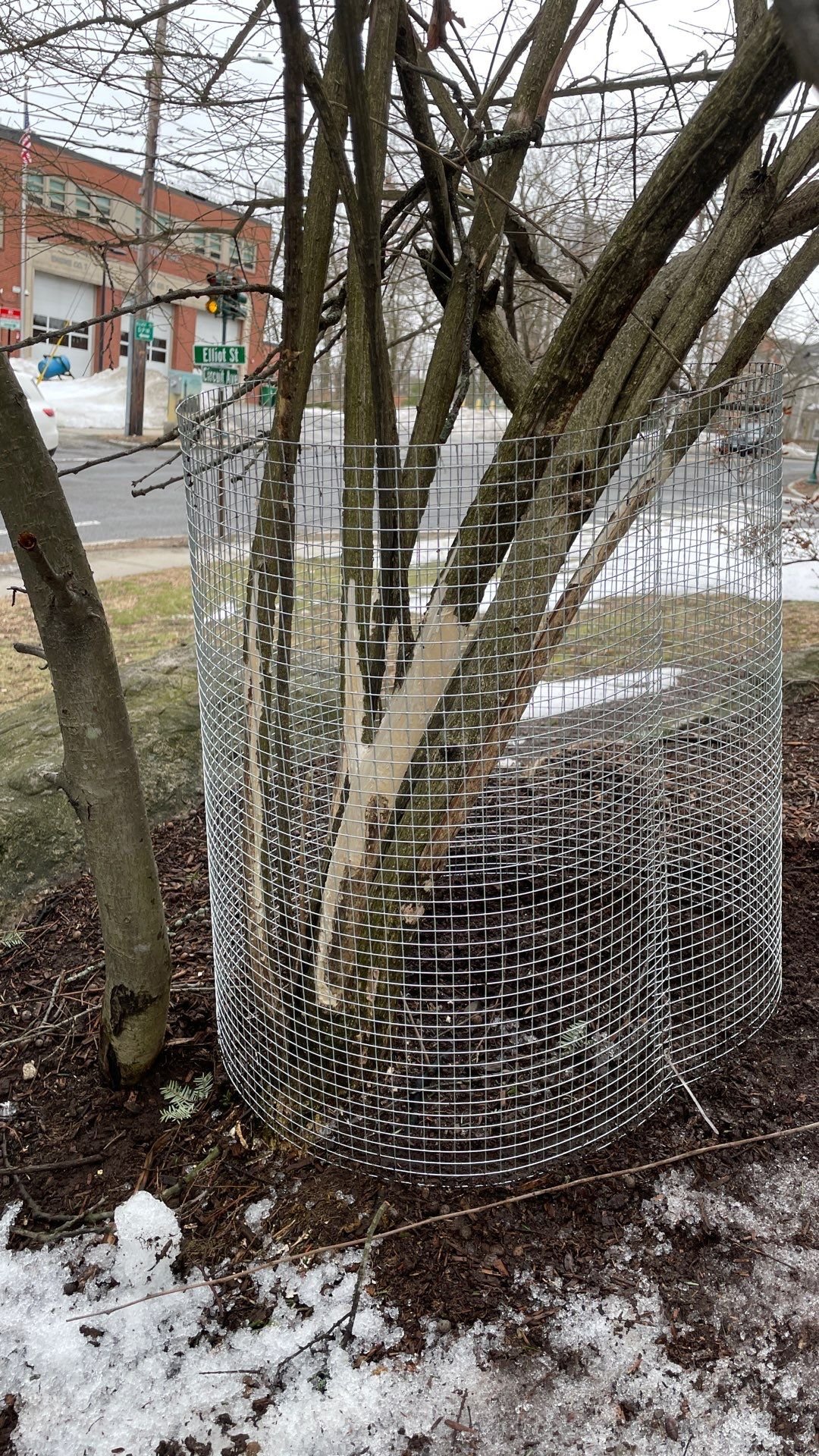
One last, but important note: these damaged trees and shrubs will need extra care this spring and summer to help them recover from the rabbit damage. We will be feeding them organic all-purpose fertilizer this Spring to be sure they get the nutrients they need to generate growth and to heal the chewed bark where possible. These plants will also need extra watering throughout the summer because, as we mentioned above, the debarking causes issues for the plants ability to take up water.
Although this winter was rough for some plants, we are sure that this upcoming season will be a good one!
Please reach out to us if you need help with fencing, pruning and/or fertilization services! You can book a Garden Consultation here.