
Helping the Waltham Land Trust remove Japanese Knotweed
As I learn more about gardening, I am able to recognize more and more invasive plants that are harming the environment by overtaking native plant species. On July 21, 2026, I was fortunate to have the opportunity to volunteer with the Waltham Land Trust group to remove these invasive species at Hardy Pond.
I arrived at the work site: the environment was cool, and being near the lake, bugs were flying and it was a little swampy. I was greeted by one of the members of the group, Cathy. She began to tell me what was on the to-do list for the morning. While I was looking around, I saw a huge patch of tall bamboo-like plants. I thought to myself, “That doesn't belong here…” Cathy explained that what I was seeing was a plant called Japanese knotweed. This plant is highly invasive and is really hard to remove because of its aggressive rhizomous roots. Rhizomous roots are horizontal stems that grow just below or along the soil surface. They are difficult to remove because they spread far and wide along the soil and can be anywhere from 10 feet deep to 65 feet wide!
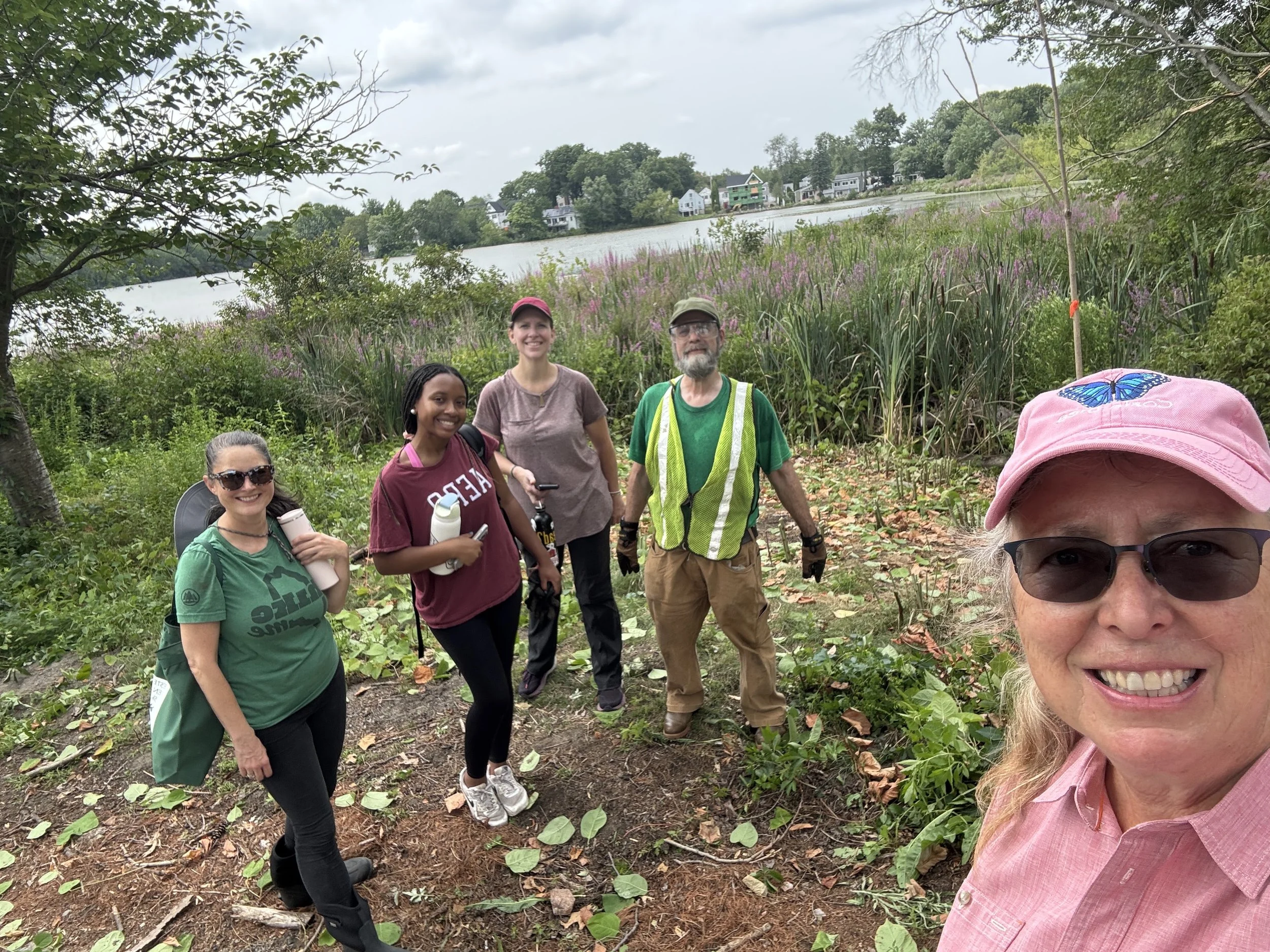
Here I am with the other Waltham Land Trust volunteers after we chopped down a ton of Japanese knotweed!
Next, I was given work gloves and began picking up piles of the long Japanese knotweed stems that had been cut down and putting them in piles out in the woods. I was worried that the plants would re-grow if we left them in the woods. But Cathy explained that the stems were able to be left in the woods because they would not replant themselves once cut above 5 inches. The lower part of the stem and roots were left in the ground. The Waltham Land Trust has been using this method for some time now and through their careful monitoring, they have never found any Japanese knotweed re-rooted from the dead stems they left in the woods. After moving the stems for a while, I wanted to try something different so I grabbed some loppers to help cut the Japanese knotweed.
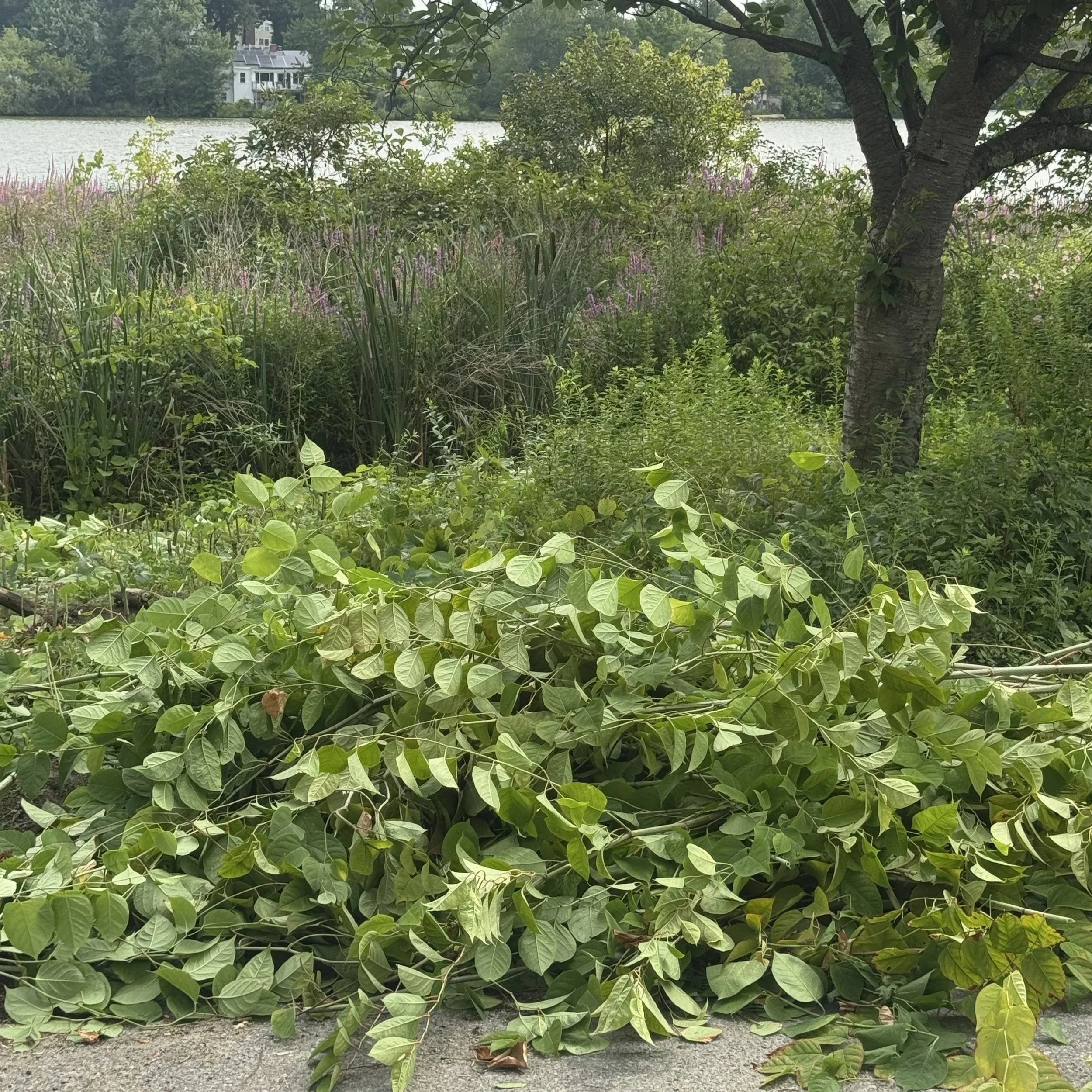
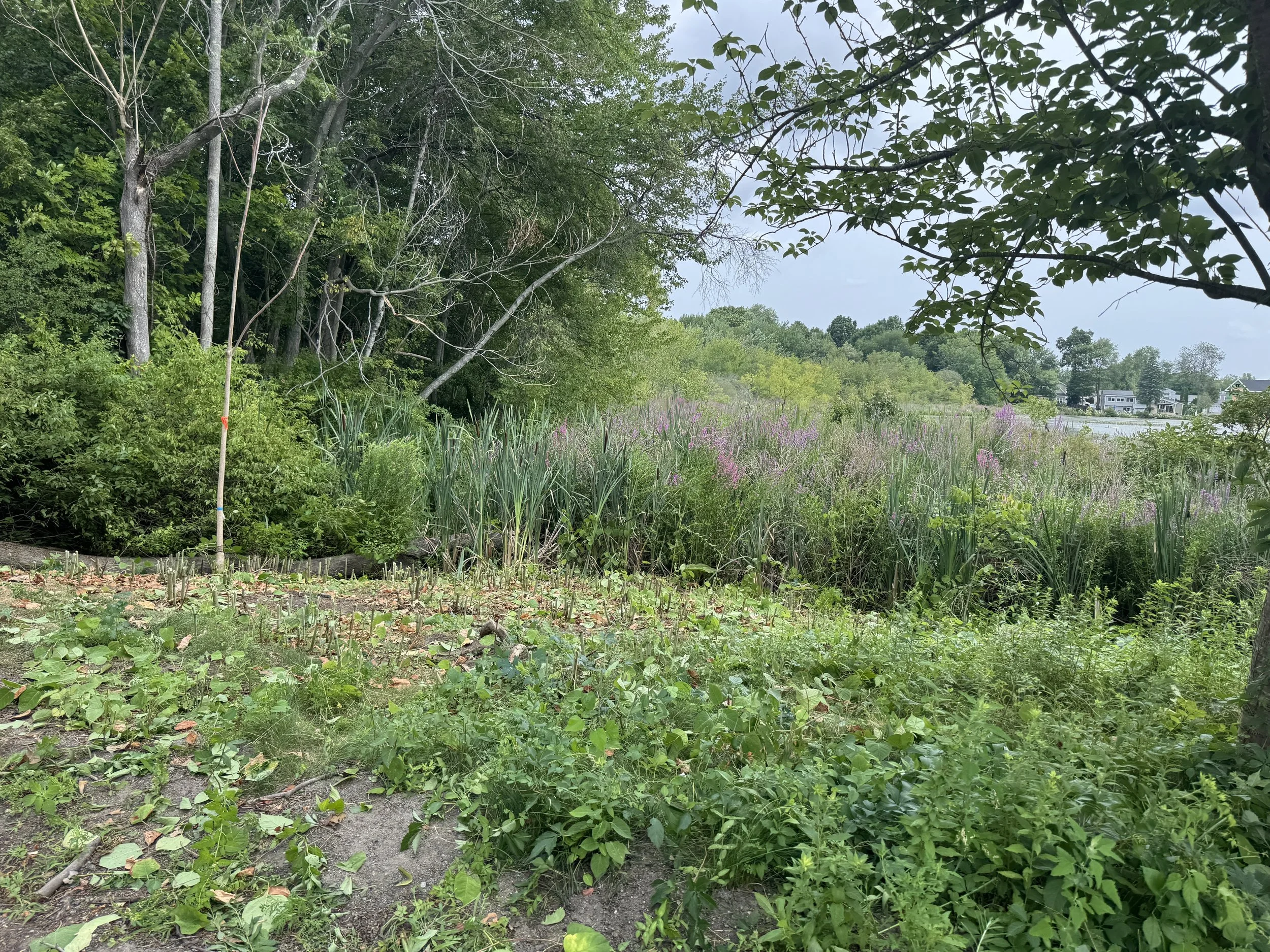
After we finished clearing out the Japanese knotweed, we worked on clearing some of the other invasives in the area. We dug up some Oriental Bittersweet vine , which is a highly aggressive vine that is native to Asia, but now grows everywhere in New England. Fun fact: colonists imported this plant years ago and used the berry-covered vines in the Fall to make wreaths! That was before we learned of the harmful effect this vine has in our local ecosystem. A mature Bittersweet vine can cover an entire tree and kill it! The Bitersweet roots form mats and can choke out plants around them so for complete eradication, removing their roots is important. A recognizable indicator of Oriental bittersweet vine is the distinctive orange colored roots it has. I would say even though there was a lot of knotweed to throw away, it was the easier removal because bittersweet vine roots are a pain to dig up.
Once we finished getting our hands dirty, we took a relaxing walk down the Smith trail and enjoyed looking along the lake. We took in the environment and I felt great about how much positive change we made that day.